Showing posts with label middle grade. Show all posts

Wednesday, February 17, 2016

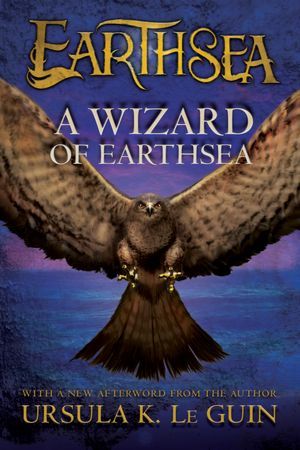
A Wizard of Earthsea by Ursula K. Le Guin Review


A Wizard of Earthsea (Earthsea Cycle, #1)
Fiction
255 pages
Ged, the greatest sorcerer in all Earthsea, was called Sparrowhawk in his reckless youth. Hungry for power and knowledge, Sparrowhawk tampered with long-held secrets and loosed a terrible shadow upon the world. This is the tale of his testing, how he mastered the mighty words of power, tamed an ancient dragon, and crossed death's threshold to restore the balance.

Completion: I had to read this for class (which is the only reason I finished it). It wasn’t hard to read per se, but there wasn’t really anything to keep me going either. Such as a shame, since I’ve only heard great things about Ursula K. Le Guin and her writing.
Writing/Style: The story is written in a very legend or fairytale-esque style. Because of this, there is such a distance between the reader and the characters that it makes it hard to know them and become invested in them. The writing itself feels like a background chapter you might get on an already established character that we care about. Imagine if Dumbledore (minus the humor, cleverness, etc.) had a rushed book about his childhood without us knowing Dumbledore as this amazing wizardly father figure for Harry. Knowing J.K. Rowling, she would still probably manage to turn that into a good story, but I digress. This book just seems a little backward, giving us the background chapter/story without purpose or interest.
Characters: The characters felt like cardboard cutouts. I could never relate/sympathize/invest in Ged, the main character. We seem to do get all the negative qualities about him (anger, pride, etc.) without any of the positive qualities, quirks, interests, and so on that would make us care or root for him. As well, we were often told things about characters and their relationships rather than following those story threads along. We get only a line or two before a character is announced to be the antagonist, and we are told that Ged and Vetch become great friends but I never see that or believe it.
Plot/Pacing: This book felt like it was on fast-forward. As well, while I understand that Le Guin was attempting to write something new and avoid certain cliches of fantasy, in the end this book felt like the pinnacle of high fantasy stereotypes.
World-building/Atmosphere: It is clear that Ursula knows a lot about this world from the geography to the different cultures; however, I the reader didn’t. Places and cultures fly by so quickly and are so many that none had a lasting impression on me. I never had time to really sink in and discover these interesting tidbits because the pacing kept rushing the characters on and on like pieces on a chessboard. This is a shame because I feel that if it had slowed down this world could have been as interesting and thorough as Westoros from Game of Thrones (well, maybe not that as good as Westoros, but just giving an example of another book that has a TON of information about places, cultures, lore, etc.).
Sub-genres (Romance, Humor, Mystery, etc.): Due to the style, we did not get much in the way of romance, humor, and mystery. All of those things can only be done well if we know and care about the characters, but these elements seemed to have been sacrificed in the name of style. However, if one would argue that there is a mystery, then it was not well done because I saw the ending and message coming from a mile away.

FINAL VERDICT: The style keeps the reader at a distance, and the pace pushes the characters from one scene to the next without much in the way of character development, humor, romance, mystery, and so on. While there are some interesting aspects to this novel, unless you particularly like a legend or fairytale-esque style of story, I would give it a pass. Simply put, most modern readers expect more in the way of character and plot development than what this book gives. 

Wednesday, May 13, 2015

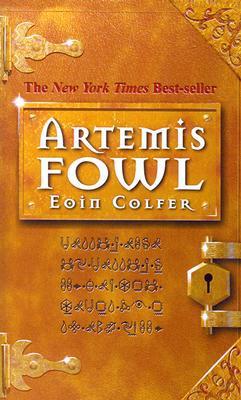
Artemis Fowl by Eoin Colfer Review


Artemis Fowl (Artemis Fowl, #1)

Fiction
316 pages

Twelve-year-old Artemis Fowl is a millionaire, a genius—and, above all, a criminal mastermind. But even Artemis doesn't know what he's taken on when he kidnaps a fairy, Captain Holly Short of the LEPrecon Unit. These aren't the fairies of bedtime stories—they're dangerous! Full of unexpected twists and turns, Artemis Fowl is a riveting, magical adventure.


Completion: A
Writing/Style: C+
Characters: C-
Plot/Pacing: C-
World-building/Atmosphere: C+
Sub-genres (Romance, Humor, Mystery, etc.): C-

Final Grade: C+ Library Rental

  This novel was a really mixed bag. The whole second half of this book I spent wondering what exactly this book was: middle grade? Young adult? Now, this normally doesn’t bother me. In fact, I cannot think of a single instance where I’ve even really given it much thought.
However, the writing in this story is such an odd mix of overly high level material mixed in with pandering, obvious immaturity that I still don’t know what to think. On one page the narrator would be talking about taxes, the economy, killing whales for oil, and other content that I just wouldn’t expect from a young adult book much less a middle grade book, but then on the next page the narrator would make farts and other bodily functions important to the lore and the plot. The book really seems like it was written for an older audience, but then condescendingly added fart jokes to lower it to middle grade.
  But let’s back up and start from the beginning.To be frank, I’ve had this book on my shelves for a couple years now, and one thing has kept me time and again from picking it up is this: it is a story about a boy genius. That might sound silly, but it is a personal pet peeve of mine. Whenever I tend to encounter this type of character, most authors commit one or more of these lazy writing sins:

1.) Calls a character a genius and nothing more
2.) Calls a character a genius and only gives that character a big vocabulary to prove it
3.) Calls a character a genius and then dumbs down the other characters to make that character seem smarter

Thankfully, Colfer avoided all of these but instead took his own puzzling route with it. Artemis Fowl is a boy genius that doesn’t act like a boy genius. He is intelligent to be sure, but, except for a couple of moments when he’s thinking/interacting with his mother and a bizarre joke near the beginning where it seems he does not understand that people have sex, there is no sign of him being twelve years old.
Except for these few times when it is convenient for the plot to remember our main character’s age, Artemis does not act, behave, or talk like a kid. Which considering the novel does have fairies, I was willing to give more leeway with at the start of the book. Who knows, I thought, perhaps the fantasy element will help explain this? Spoiler: it does not. If this had been a cartoon, again I would have given it more leeway. In the end, I resigned myself to the explanation I concocted on my own: he comes from privilege and power and thus has the resources and luxury to be more educated than others.
Does this explain everything? Hardly. Artemis acts with the skill and calm of a villain, with the poise of someone with experience, and with a stoic nature unfit of a normal child. Nor is it explained why his sidekick Butler does not rein Artemis in. It is explained that the Butler family has always served the Fowl family; however, am I to believe that there is no adult Fowl alive and well that can take care of Artemis and direct Butler?
So, yes, my pet peeve rarely flared up because Artemis so rarely reminded me that he was supposed to be a kid; however, this does come with its own weaknesses. Firstly, Artemis seems to lack a personality other than being a smart anti-hero character. While he sometimes has good lines of dialogue, Artemis for some unexplained reason is emotionally constipated. This lack of emotion really made the character more wooden than he needed to be, making him both hard to relate to and hard to become emotionally invested in. Artemis rarely shows emotion at all except with his mother, which could have led to a better sympathy for both characters and a transformation in Artemis. However, the small payback for this subplot is practically erased in the epilogue.
Of course, this all makes it sound like I hated the book when I really didn’t. I was intrigued by the advanced writing and plot. The side characters were pretty fleshed out and always colorful, even if not all of them were exactly my favorites. As well, the liberties Colfer took with fairy lore reminded me fondly of Rick Riordan’s liberties with Greek mythology in the Percy Jackson series.
I only wish that Colfer had fleshed out the main characters more, especially Artemis, had found a more fitting tone, and tweaked the epilogue. Without giving anything away, the narrator revealed in the epilogue just seems improbable if not completely lacking.
Once again, such a shame as I was very interested in finding out who the narrator was. If Colfer had made these fixes, I would have been that much more invested in the characters and plot, and I think the book could have become one of my favorites like Percy Jackson. As it is, I would still say give it a read if you’re interested, but hopefully you now know just what exactly you are signing yourself up for. As for me, I think I’m done here. For the first book in a series, Artemis Fowl was an interesting experiment; however, I think continuing on would only risk the flaws becoming even more tedious.

Sunday, April 26, 2015

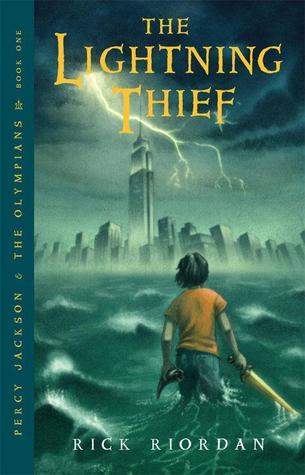
The Lightning Thief (Percy Jackson and the Olympians #1) by Rick Riordan Review


The Lightning Thief (Percy Jackson and the Olympians, #1)

Fiction
377 pages

Percy Jackson is a good kid, but he can't seem to focus on his schoolwork or control his temper. And lately, being away at boarding school is only getting worse-Percy could have sworn his pre-algebra teacher turned into a monster and tried to kill him. When Percy's mom finds out, she knows it's time that he knew the truth about where he came from, and that he go to the one place he'll be safe. She sends Percy to Camp Half Blood, a summer camp for demigods (on Long Island), where he learns that the father he never knew is Poseidon, God of the Sea. Soon a mystery unfolds and together with his friends -- one a satyr and the other the demigod daughter of Athena -- Percy sets out on a quest across the United States to reach the gates of the Underworld (located in a recording studio in Hollywood) and prevent a catastrophic war between the gods.

Completion: A+
Writing/Style: A
Characters: A
Plot/Pacing: A
World-building/Atmosphere: A+
Subgenres (Romance, Humor, Mystery, etc.): A+

Final Grade: A Get Thee to a Bookstore!

Who knew I would like a middle grade book?
As a 21 year old, I thought I was way past middle grade books, but I was very, very, very wrong. Now that might sound a little pretentious to underestimate middle grade books like that, but as a kid I was very precocious AND pretentious. I practically skipped elementary and middle grade books all together. My reading level was so high that I prided myself on reading the hardest books in my school and public libraries. However, I am so glad for the continued fame of Percy Jackson and for my cousin who persuaded me to read this series.
I can now see why Percy Jackson is compared to Harry Potter: it is contagiously fun. Riordan takes the basic hero’s journey and makes it fresh again. I also appreciated that how the characters, main and side characters, were balanced: talented but believable. As well, the book tackles disabilities which is all too often overlooked or omitted.
As far as the story goes, you can go into this book not knowing anything about Greek mythology, but it’s extra fun if you do. I was so excited to see what sort of twists Riordan was going to pull on these classics, and he didn’t disappoint. Riordan’s imaginings of Greek gods and legends are witty, humorous, and yet just serious enough for me to invest in them. Reading this book, I could tell how much fun he must have had putting all of this together.
After I finished, I immediately went out and got the next in the series. Probably the best thing about this series is the humor. It is so on point that it appeals to this 21 year old as much as it would have appealed to my 10 year old self. This was a light quick read that I would definitely recommend but especially for the summer.

Mild Spoiler of the Ending: 
This didn’t change my overall opinion of the book, but it did worry me a little bit. The reader quickly discovers that Percy’s mother is dating an abusive man in order to protect Percy. At the end of the novel, Percy is determined to kill/turn-to-stone this man with Medusa’s head, but his mother convinces him otherwise. Percy leaves her the head, and it is implied that Percy’s mother later uses the Medusa head on this man. Now, while this might have only been intended as humor or a convenient way of getting rid of the man, it worries me that “revenge” or violence on an abuser would be portrayed in this series. Now, I am not one who believes that children cannot handle hard topics or issues. And yet, the tone of the novel is confused in this scene as the mother is able to so casually and callously dispose of this man she was with and without any consequences or repercussions. It leaves a rather light-hearted story on a dark and unnecessary note.