Tuesday, October 13, 2015

Kelly Reads Twilight Reimagined: Foreword and Chapter 1


WARNING: THERE BE SPOILERS AND CURSING AHEAD.
Before I start this read-along series, I might as well come clean: I used to like Twilight. GASP! In middle school, I read many a bad book, but Twilight was perhaps the most famous. I’ve read all the books (more than once) and seen all the movies (more than once: curse you ABC Family!), making me more than qualified to evaluate this Twilight gender-bender (the gender of the characters are swapped: Bella is a dude now, Edward a girl, and so on). While I’m no longer under Twilight’s spell, I will admit that Twilight was great at allowing people to project themselves and their ideals onto the characters. When I was reading it, Bella was much more snarky and Edward was much hotter and laid back. Thus, when I first saw Bella and Edward on the big screen looking constipated and humorless, my undying love for sparkling vampires was suddenly cured.
Also, I would just like to state that while I’m hoping we will all get a few laughs out of this read-along I’m by no means bashing the author Stephenie Meyer. Hey, making millions off of a debut novel is stellar no matter the quality of the book.
With all that being said, let us begin!

THE COVER
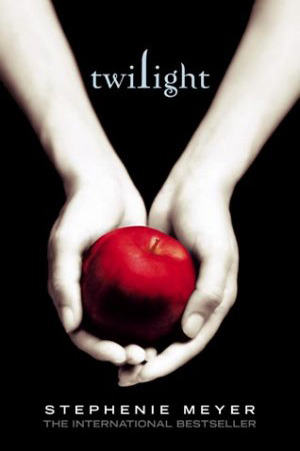
Twilight (Twilight, #1)
Twilight
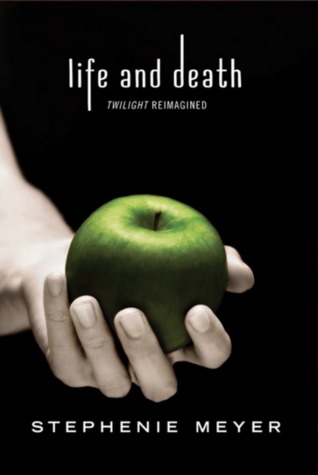
Life and Death: Twilight Reimagined
Twilight Reimagine
Now that Bella is a dude there’s no need to hold an apple with two hands anymore. Apparently, guys one hand that shit. And apparently apples have genders now. 


FOREWORD (in a nutshell)
-Nope. This is not Midnight Sun. Sorry.
-Apparently, Meyer was annoyed that people viewed Bella as a damsel in distress when really she’s a human in distress. To prove this, she decided to write this gender-bender which is where the genders of the characters are swapped (Bella is now a dude, Edward a girl, and so on). Which really goes to show that Meyer really doesn’t understand the complaints against Twilight if that’s all she took from it.
-Then Meyer lists what she actually changed in the book:
-she didn’t swap the genders of Bella’s mom and dad or super duper minor characters
-Beau (Bella as a dude) has a slightly different personality and I quote “The biggest variations are that he’s more OCD, he’s not nearly as flowery with his words and thoughts, and he’s not as angry — he’s totally missing the chip Bella carries around on her shoulder all the time”. Take that for what you will because I can’t even.
-Tweaks in wording and events
-Mythology tweaks such as with Alice’s visions
-Miscellaneous
PREFACE
The preface is less than half a page so mostly the pronouns have changed. However, I’m so glad to see that Bella as a dude has finally learned how to breathe. But seriously:
Life and Death: Twilight Reimagined (Beau)
“I stared across the long room, into the dark eyes of the hunter, and she looked pleasantly back at me.”
Twilight (Bella)
“I stared without breathing across the long room, into the dark eyes of the hunter, and he looked pleasantly back at me.”
CHAPTER 1
Most of the exposition starts out the same. Beau’s mom is driving him to the airport so he can go live with his dad in Forks. Instead of Bella’s white eyelet lace shirt, Beau is wearing a Monty Python t-shirt that doesn’t quite fit. Don’t worry though! Apparently, that won’t be an issue anymore because he “wouldn’t be needing t-shirts again soon.” Uh? Dude, you are going to Washington state not Antarctica; I’m sure you still be able to wear t-shirts.
Next Beau describes Washington and how he used to spend a month of the summer there until he and his father started vacationing in California instead. Beau clearly means serious business because he “started making ultimatums” to start going to California rather than Forks while Bella only “put her foot down”.
Beau describes going to live in Forks like hard prison time while Bella describes it as exile. Now, back in middle school, I understood the teenage angst of being under the thumb of your parents and somehow managed to sympathize with Bella. But, let’s be clear here: Bella/Beau are willingly deciding to go! In fact, it was their idea! A couple paragraphs ago they even explained how they had so much power in their family that they “started making ultimatums” and “put their foot down” in order to go to California in the summer instead of Forks! I’m sorry, but what kind of teenager has that kind of power and then still asks for sympathy with all this melodrama?
Later, Beau admits, “Okay, just a tad melodramatic there. I have an overactive imagination, as my mother was fond of telling me.” This is just so odd to me. It just doesn’t ring true for a teenager. Who brings up their mom like that? I just imagine him with his pinkie in the air, saying, “Oh, well, like my mother was saying the other day…”
However, all of this is just small pickings compared to this baffling, little gem.
“My mom says we look so much alike that I could use her for a shaving mirror.”
What?! Just what? Does your mom have facial hair? Mind you, he hasn’t described himself yet so this comparison means next to nothing right now. But, oh, it gets so much better with these following lines.
“It’s not entirely true, though I don’t look much like my dad at all. Her chin is pointy and her lips full, which is not like me, but we do have exactly the same eyes. On her they’re childlike — so wide and pale blue — which makes her look like my sister rather than my mom. We get that all the time and though she pretends not to, she loves it. On me the pale blue is less youthful and more…unresolved.”
First, did you seriously just say how similar you and your mom look just to backtrack and say all the ways you do not look alike?! And again what teenager narrates like this? Her lips are full? Bro, that’s your mom. Plus, the “looks like my sister” line is something awkward guys at the checkout counter say. **shiver** Also, wouldn’t it be pretty dangerous to try to use another person’s face as a shaving mirror if literally the only thing you have in common with them are your EYES?!!! By the way, how does the pale blue of your eyes make you less youthful? And I really don’t even know where to start with the unresolved part. What does that mean?
Me Pulling Out My Hair
Anywho, Beau gets on the plane and meets up with his dad. One of the first things Charlie (dad) asks Beau is:
“You really feel okay about leaving her [Beau's mom]?”
You might be wondering, “Well, what’s so wrong with that?” You’re right, of course. There’s nothing per se wrong with that line. Until you pair it with the following paragraph.
“We both understood that this question wasn’t about my own personal happiness. It was about whether I was shirking my responsibility to look after her. This was the reason Charlie’d never fought Mom about custody; he knew she needed me.”
Is your mother really that incompetent that she needed a minor to look after her? How did the court give her custody in the first place? Mind you, his parents divorced when he was an infant! Also, God forbid you ever did actually ask about your own son’s personal happiness. Also, no, this part of the conversation is NOT in the original Twilight. Oh boy, this does not bode well for the rest of this novel.
Glad to see Beau is clumsy too (granted his clumsiness is blamed on a growth spurt while Bella just IS clumsy) as he totally hits a guy with a duffel bag. Plus, the guy is tatted and he and the girl he’s with are totally not having it and they get into Beau’s face about it.
Now Beau’s looking out the window as his dad drives and has this epiphany of the scenery: It was probably beautiful or something.” Wasn’t that just awe-inspiring? What a sophisticated way of putting it! Guys, down in the comments, tell me are your thoughts always this sublime?
Also, apparently Beau was “The kid who got shoved into lockers until I’d suddenly shot up eight inches sophomore year.” I don’t know why this cliche amuses me; it just does.
Now, for those of you who have read Twilight you might remember the “Maybe there is a glitch in my brain” line. Well, Meyer kept it, but right before it she added this beauty:
“Maybe I smelled vinegar when they smelled coconut.”
Just let that sink in for a moment. “Maybe I smelled vinegar when they smelled coconut.” Oh, the writerly possibilities. Why vinegar? Why coconut? How long did Meyer sit there trying to think of just what kind of pairing she wanted to use for this example? Now, the real question is: did she mean this to be funny?
Beau is going through his first day of school at this point. He, like Bella, has also read Bronte, Shakespeare, Chaucer and Faulkner for some reason. I mean readers relate with readers, but even in the original it seemed a bit much. I will point out that I do like the fact that Beau (short for Beaufort) is named after his Grandpa who died a couple months before he was born and he hates the name. I do think that’s a nice touch. Not much, but something.
Okay, so now Beau is eating lunch and has discovered the Cullens. To get the true effect of this description, let’s take a look at how the original Twilight first described Edward:
“The last was lanky, less bulky, with untidy, bronze-colored hair.”
Now here’s the description for Edith, Edward’s counterpart:
“The last girl was smaller, with hair somewhere between red and brown, but different than either, kind of metallic somehow, a bronze-y color.”
Wow. What a nice tweak of editing there. So much better I can’t even…
Also, when Edith catches Beau staring at her, he doesn’t blush, but instead “could feel the patches of red start to bloom in my face.” I know this is meant to be a manly way to describe blushing, but it just sounds like he is artistically breaking out into a rash…
Now Beau is in Biology with Edith or rather Edythe since he found out he’s been spelling her name wrong in his head the whole time. It’s for this exact reason why this gender-bender will never work. As an author, you have to do a FULL rewrite. You cannot just leave large swaths of wording and content the same because there’s no way it’ll match the new gender’s personality and voice. It stands out so much. While it still wouldn’t have been the best writing, there’s a way Meyer could pulled off a chatty narrator who is less sophisticated and who rambles off descriptions off the top of his head. However, these details and voice don’t match the style of the original Twilight which makes you end up with an edited version that is somehow worse for it.
Afterward, we go through the scene where Beau finds Edythe trying to change her Biology class. Beau, like Bella, experiences a “thrill of genuine fear” from Edythe’s glare, but Meyer cannot let her readers forget that Beau is a MAN and so she adds the fragment “As if she were going to pull a gun out and shoot me.
The chapter ends with Beau upset, his voice cracking, as he tries to drive home “trying to think of nothing at all” instead of Bella who was “fighting tears the whole way.
Here’s an equation of what I’ve learned from this chapter:
Being a MAN= prison imagery + guns + red patches + smelling vinegar instead of coconut + unresolved eyes


Tune in next Tuesday for more Kelly Reads Twilight Reimagined!

Sunday, October 11, 2015

Kelly Reads Twilight Reimagined Coming Soon!

Just after we've all let out a sigh of relief…
As many of you already know, the 10th anniversary of Twilight has welcomed a new gender-bending version of the tale. Life and Death: Twilight Reimagined follows the gender swapped versions of Twilight’s characters: Bella is now Beau and Edward is now Edythe. Stephenie Meyer has worked on this in secret and has hinted that there have been more changes than just the genders. She said she was inspired to write this to prove that Bella was NOT a damsel in distress but a human in distress. Did she succeed? Just how much did the story change?
Come find out as I read the novel in my new series: Kelly Reads Twilight Reimagined! Starting this Tuesday (10/11/2015) I’ll give you all the funny details you want to know without having to read the thing! Check in to watch me slowly loose my sanity; it will be fun!

Tuesday, October 6, 2015

F. Scott Fitzgerald Short Stories - A Review

While I haven't read all of F. Scott Fitzgerald's work, here are some of my condensed thoughts on some of his short stories.

Bernice Bobs Her Hair: Overall this was a light fluff piece with a slightly darker ending. An interesting fact is that Fitzgerald himself labeled this short story as trash. While I wouldn’t go that far, this story does lack the substance that normally fills Fitzgerald’s more serious work. As well, I found the slightly racist Indian references to be largely unnecessary.

The Offshore Pirate: The romance itself is much like any modern romance: a formulaic guilty pleasure that is slightly sexist. Ardita, the main female character, does manage to pull off the impossible by not completely annoying me. Seriously, Fitzgerald has a talent for writing rich, entitled female characters in way that keeps me interested and not off-the-handle angry. However, the romance aside, I was most surprised by the unnecessary blatant racism in it, and I don’t just mean he used the word “negro”. In the background, the black characters thanklessly push forward the plot along with odd moonlit dinners and atmospheric “exotic” dance music…but, like seriously, whyyy? Plus, the plot twist at the end unravels any characterization the black characters may have had.

The Cut-Glass Bowl: Oh, God, how I’m torn on this piece! Let me list all the things for you. First, the beginning is a bit hard to follow without a clear focus for a while. Second, the writing, especially at the end, is phenomenal, gorgeous, insane, beautiful, dark. No doubt about it. Third, it does worry me a little that the message behind the cut-glass bowl in the piece is almost a revenge fantasy for guys who have been rejected and that’s totally not okay and is so disturbing. You see my problem?

The Ice Palace: This full circle story was less problematic than the rest but because of this it also did not stand out as much. The atmosphere is well-established and beautifully written, but I’m afraid that the main character’s dilemma came across as a bit melodramatic to me.


FINAL VERDICT: If you aren’t a Fitzgerald fan or scholar, check out “The Cut-Glass Bowl” and give the others a pass. If only for that ending, “The Cut-Glass Bowl” has some dark and beautiful imagery in it while the others fall shy of writing home about. If you liked The Great Gatsby, read “The Cut-Glass Bowl” and skip the rest. Remember Fitzgerald as a lovely writer and nothing more my friend. If you LOVE Fitzgerald’s work and I mean you read This Side of Paradise and/or The Beautiful and the Damned and still LOVE his work, then read all of these short stories, if you haven’t already. 

Tuesday, September 29, 2015

Age of Innocence Review


The Age of Innocence

Fiction
Author: Edith Wharton
305 pages

Winner of the 1921 Pulitzer Prize, The Age of Innocence is Edith Wharton’s masterful portrait of desire and betrayal during the sumptuous Golden Age of Old New York, a time when society people “dreaded scandal more than disease.”
This is Newland Archer’s world as he prepares to marry the beautiful but conventional May Welland. But when the mysterious Countess Ellen Olenska returns to New York after a disastrous marriage, Archer falls deeply in love with her. Torn between duty and passion, Archer struggles to make a decision that will either courageously define his life—or mercilessly destroy it.


Completion: Boy did this story drag. There is something about plots involving rich characters that just makes the pacing go out the window.

Writing/Style: The novel read like an old woman telling a story, unable to feel the pulse for the interesting details and events. Line by line the writing isn’t bad, but, when you look at the overall picture, it feels as if the author was unable to decide what details mattered and thus everything is included in the same drab fashion. If the writing had been trimmed down, it would have solved a lot of the pacing issues and perhaps the writing would not have been as grating as it was.

Characters: I found it so hard to relate and sympathize with Archer, the main character, and his rich, white non-problem problems. Half the time I didn’t even believe in Archer’s character. He oscillates back and forth from understanding and being critical of the flaws in his society to mindlessly taking them in stride. While I know this is possible for people to do in real life, it appeared that his opinions and attitude changed not in a progression of his character, but for the convenience of the author. This and his insistent thoughts about Olenska just made him a nauseating character.

Plot/Pacing: The leisurely pacing makes the plot suffer. While perhaps realistic for these Archer and Olenska to be separated by society and travel, it was not written in a way that compounded my interest and tension but instead diluted it. Scenes of conflict and tension were isolated in bubbles littered sparingly throughout the story. Like air out of a balloon, the more time they spent apart the less I cared. Partly due to the story dragging, but mainly because of Archer’s insipid inner dialog and obsession with Olenska. However, without giving anything away, I found the ending quite surprising which I give Wharton credit for. I marinated in it for days afterward and I’m still not quite sure what I make of it. As much as I enjoyed the ending for not going where I thought it was, I'm still not quite sure if it made up for the slog to get there. I spent a long time wondering if this story would have been better suited as a short story, and I think in a lot of ways it would have been. A lot of what bothered me in this novel became more prominent due to its length.

World-building/Atmosphere: While the meandering plot dilutes the tension, it certainly adds to the world-building. By the end of this, I felt I very much understood how people of higher society looked, felt, and spent their time during this period.

Sub-genres (Romance, Humor, Mystery, etc.): If there was humor, it went over my head. There’s not much in the way of mystery except to find out what happens to these characters. Sadly, I did not believe in the romance one smidgen. Archer and Olenska have no chemistry, and, despite the pacing of the overall plot feeling slow, their romance feels oddly accelerated beyond the point of believability. They have quite a few scenes together, but those scenes never add up to love to me.

FINAL VERDICT: For the casual reader, I would give this a pass. It is too much of a struggle to get through for such little reward. For those who appreciate Wharton’s writing, I believe you will be satisfied with this story, and the ending will resonate deeper with you than it did for me. As for me, it looks like I am not much of Wharton fan and will be leaving this book behind me.

Monday, September 21, 2015

This Side of Paradise Review

This Side of Paradise
Fiction
By: F. Scott Fitzgerald
288 pages
This Side of Paradise, F. Scott Fitzgerald's romantic and witty first novel, was written when the author was only twenty-three years old. This semi-autobiographical story of the handsome, indulged, and idealistic Princeton student Amory Blaine received critical raves and catapulted Fitzgerald to instant fame. 


Completion: I finished it. I suppose that's a good thing? I did read this for school though so that helped me get through it.

Writing/Style: You can definitely tell this is Fitzgerald's debut. You get glimmers of his gorgeous imagery and style, but it's not there nearly enough.

Characters: Tired of all those angsty YA heroines? Meet Amory Blaine. He'll make you want those YA heroines back as he goes through his privileged white boy life. The other characters aren't anything to write home about either.

Plot/Pacing: What plot? What pacing? But, seriously, we follow Amory through a large chunk of his life from childhood to post-college, and the pace meanders through as Amory slowly discovers himself. If Amory was more likable, this might not of been as much of a negative, but as it is, the slow pacing makes the book even more of a struggle to finish.  

World-building/Atmosphere: When you are able to look over Amory's big egotistic head, you can really see what it was like in the 1920's. In particular, I wish college today was more like it was in Fitzgerald's time where you went to class but didn't worry about tests or homework and just went on wild adventures. Well, like college back then but minus the racism and sexism, of course.

Sub-genres (Romance, Mystery, Humor, etc.): No mystery, for sure. If there was humor, I didn't catch it. As far as romance goes, Amory is in several romantic relationships, but I never felt emotionally attached to any of them. This is probably because the relationship he shared with the "love of his life" was a very narcissistic relationship for the both of them. It's very melodramatic, and it technically fits what the story is going for, but it lacks that investment from the reader which is a shame because it could have helped to make Amory more likable. 

FINAL VERDICT: If you are a huge fan of Fitzgerald's, then you'll probably want to check this book out. Or rather, you probably already have. From a certain angle, it is interesting to see how Fitzgerald progressed in his writing, and to see bits of his own life mixed in the fiction. However, for most of you, if I were to recommend a Fitzgerald work, I would recommend The Great Gatsby. There's just more of everything there because Fitzgerald has figured out his own writing and polished his ideas. 

Sunday, August 16, 2015

Reading Lolita in Tehran Review


Reading Lolita in Tehran

Nonfiction
Author: Azar Nafisi
356 pages

Every Thursday morning for two years in the Islamic Republic of Iran, a bold and inspired teacher named Azar Nafisi secretly gathered seven of her most committed female students to read forbidden Western classics. As Islamic morality squads staged arbitrary raids in Tehran, fundamentalists seized hold of the universities, and a blind censor stifled artistic expression, the girls in Azar Nafisi's living room risked removing their veils and immersed themselves in the worlds of Jane Austen, F. Scott Fitzgerald, Henry James, and Vladimir Nabokov. In this extraordinary memoir, their stories become intertwined with the ones they are reading. Reading Lolita in Tehran is a remarkable exploration of resilience in the face of tyranny and a celebration of the liberating power of literature.

Rereadable!

            I was fortunate enough to read this book during a couple of really rainy days this summer. I became completely absorbed in Nafisi’s world. Couped up in my house, I began to imagine the vaguest sense of what Nafisi and her girls must have felt, imagining what it would be like to walk out my door and find my world altered beyond recognition. The idea that I could walk out my door everyday fully covered and become like a ghost or to rebel or to be perceived as rebelling and suffer abuse and injustice, taken away to an uncertain fate, was frightening.
To be clear, I haven’t read all the books that Nafisi taught, but the ones I had read became even more interesting and enlightening in the context of Tehran. The class debate Nafisi facilitated was especially eye-opening and oddly comparable to my limited experience as a teaching intern and student in similar debates.
Of course, I can’t wait to catch up to Nafisi’s reading list so that I may enjoy this book even more in rereads. For those of you that haven’t read any of the books discussed in this one and don’t have a background in literary analysis, I am still torn as to my recommendation. While the sections on Tehran’s history as experienced by Nafisi are indeed heartbreaking, powerful, and sublime, I can see that there will be those who don’t have the patience for the intellectual literary portions of the book. And while I understand that those sections might be difficult or tedious, I pity you, for this is a beautiful novel. I suppose, in the end, you’ll have to decide for yourself. I know I have.

Monday, August 10, 2015

Three Cups of Tea Review


Three Cups of Tea: One Man's Mission to Promote Peace ... One School at a Time

Nonfiction
By: Greg Mortenson and David Oliver Relin
349 pages

Anyone who despairs of the individual’s power to change lives has to read the story of Greg Mortenson, a homeless mountaineer who, following a 1993 climb of Pakistan’s treacherous K2, was inspired by a chance encounter with impoverished mountain villagers and promised to build them a school. Over the next decade he built fifty-five schools—especially for girls—that offer a balanced education in one of the most isolated and dangerous regions on earth. As it chronicles Mortenson’s quest, which has brought him into conflict with both enraged Islamists and uncomprehending Americans, Three Cups of Tea combines adventure with a celebration of the humanitarian spirit.

Rereadable!

            To be completely honest, the introduction's excess praise read like a love letter and made me a little nauseous and more than a little dubious about reading this book. Granted, I was already a little dubious about the idea of a white American man going to "fix" other countries. What if this book was nothing more than an ego boost and big pat on the back? Come to find out, I shouldn’t have worried. 
Greg's actions and results speak for themselves. The writing was lovely and visual, especially when it focused on the landscapes of these areas. The book won me over not only with Greg's determination to work alongside the people and cultures of these countries in a non-aggressive way through education but also the time the book took to flesh out a balanced picture of the Middle East.
David Oliver Relin, the primary author, could have so easily glossed over the nature scenes or the wide cast of characters that Greg encountered, and I was glad to find how much time he took in detailing these people and giving credit to those that helped Greg along the way. By the end of the book, I felt that I was equally educated and inspired.
While I believe the book could have pushed Greg’s character further which could have added some more depth instead of leaning on his heroism, I understand that they obviously wanted success and awareness for the cause, and America certainly loves its heroes. (There are a few hints of Greg’s flaws such as lack of delegation skills/care for his health/timeliness and spending so much time away from his family, but I believe the book would have benefited from more detail). 
Overall, I appreciated the journey it took me on into foreign lands and cultures that have become unfairly deemed as only dangerous and barbaric. I am happy to have read this book, and I would definitely recommend it.

            Now, to address the allegations against Greg Mortenson and this book. I had only heard the faintest whispers of the controversy before I read this book. I purposely read it and reviewed it before looking at the issues surrounding it. I did this so I could try to stay unbiased while reading it and I’m glad I did.
For those who don’t know, there are allegations (I’m not how much has been proved at this point) that there were large exaggerations and omissions in the book and that Greg Mortenson greatly mismanaged money for his projects. And while I cannot condone lying, I cannot help but think about the good this man and this book has done. The number of schools he built and that are still in operation might not be true, but there were schools built and there are still schools in operation. Other details might be wrong as well, but the book still felt much more balanced and respectful toward the people and countries it talks about than I ever heard in the media on the “War in the Middle East”.
It’s such a shame that a controversy like this exists for a book that I think did and can do a lot of good. I felt so much more educated and inspired after reading this book. No matter what they end up finding on the book or Mortenson, that inspiration isn’t false. So while I cannot judge Mortenson and I don’t want to, I am here to judge the book, and I would still recommend the book. While this controversy might mean you should lend it from a friend or rent it from the library, I think it still works as an interesting read, a compelling cause, and education on a part of the world that is misrepresented and ignored.