Showing posts with label Classic. Show all posts

Tuesday, September 29, 2015

Age of Innocence Review


The Age of Innocence

Fiction
Author: Edith Wharton
305 pages

Winner of the 1921 Pulitzer Prize, The Age of Innocence is Edith Wharton’s masterful portrait of desire and betrayal during the sumptuous Golden Age of Old New York, a time when society people “dreaded scandal more than disease.”
This is Newland Archer’s world as he prepares to marry the beautiful but conventional May Welland. But when the mysterious Countess Ellen Olenska returns to New York after a disastrous marriage, Archer falls deeply in love with her. Torn between duty and passion, Archer struggles to make a decision that will either courageously define his life—or mercilessly destroy it.


Completion: Boy did this story drag. There is something about plots involving rich characters that just makes the pacing go out the window.

Writing/Style: The novel read like an old woman telling a story, unable to feel the pulse for the interesting details and events. Line by line the writing isn’t bad, but, when you look at the overall picture, it feels as if the author was unable to decide what details mattered and thus everything is included in the same drab fashion. If the writing had been trimmed down, it would have solved a lot of the pacing issues and perhaps the writing would not have been as grating as it was.

Characters: I found it so hard to relate and sympathize with Archer, the main character, and his rich, white non-problem problems. Half the time I didn’t even believe in Archer’s character. He oscillates back and forth from understanding and being critical of the flaws in his society to mindlessly taking them in stride. While I know this is possible for people to do in real life, it appeared that his opinions and attitude changed not in a progression of his character, but for the convenience of the author. This and his insistent thoughts about Olenska just made him a nauseating character.

Plot/Pacing: The leisurely pacing makes the plot suffer. While perhaps realistic for these Archer and Olenska to be separated by society and travel, it was not written in a way that compounded my interest and tension but instead diluted it. Scenes of conflict and tension were isolated in bubbles littered sparingly throughout the story. Like air out of a balloon, the more time they spent apart the less I cared. Partly due to the story dragging, but mainly because of Archer’s insipid inner dialog and obsession with Olenska. However, without giving anything away, I found the ending quite surprising which I give Wharton credit for. I marinated in it for days afterward and I’m still not quite sure what I make of it. As much as I enjoyed the ending for not going where I thought it was, I'm still not quite sure if it made up for the slog to get there. I spent a long time wondering if this story would have been better suited as a short story, and I think in a lot of ways it would have been. A lot of what bothered me in this novel became more prominent due to its length.

World-building/Atmosphere: While the meandering plot dilutes the tension, it certainly adds to the world-building. By the end of this, I felt I very much understood how people of higher society looked, felt, and spent their time during this period.

Sub-genres (Romance, Humor, Mystery, etc.): If there was humor, it went over my head. There’s not much in the way of mystery except to find out what happens to these characters. Sadly, I did not believe in the romance one smidgen. Archer and Olenska have no chemistry, and, despite the pacing of the overall plot feeling slow, their romance feels oddly accelerated beyond the point of believability. They have quite a few scenes together, but those scenes never add up to love to me.

FINAL VERDICT: For the casual reader, I would give this a pass. It is too much of a struggle to get through for such little reward. For those who appreciate Wharton’s writing, I believe you will be satisfied with this story, and the ending will resonate deeper with you than it did for me. As for me, it looks like I am not much of Wharton fan and will be leaving this book behind me.

Monday, September 21, 2015

This Side of Paradise Review

This Side of Paradise
Fiction
By: F. Scott Fitzgerald
288 pages
This Side of Paradise, F. Scott Fitzgerald's romantic and witty first novel, was written when the author was only twenty-three years old. This semi-autobiographical story of the handsome, indulged, and idealistic Princeton student Amory Blaine received critical raves and catapulted Fitzgerald to instant fame. 


Completion: I finished it. I suppose that's a good thing? I did read this for school though so that helped me get through it.

Writing/Style: You can definitely tell this is Fitzgerald's debut. You get glimmers of his gorgeous imagery and style, but it's not there nearly enough.

Characters: Tired of all those angsty YA heroines? Meet Amory Blaine. He'll make you want those YA heroines back as he goes through his privileged white boy life. The other characters aren't anything to write home about either.

Plot/Pacing: What plot? What pacing? But, seriously, we follow Amory through a large chunk of his life from childhood to post-college, and the pace meanders through as Amory slowly discovers himself. If Amory was more likable, this might not of been as much of a negative, but as it is, the slow pacing makes the book even more of a struggle to finish.  

World-building/Atmosphere: When you are able to look over Amory's big egotistic head, you can really see what it was like in the 1920's. In particular, I wish college today was more like it was in Fitzgerald's time where you went to class but didn't worry about tests or homework and just went on wild adventures. Well, like college back then but minus the racism and sexism, of course.

Sub-genres (Romance, Mystery, Humor, etc.): No mystery, for sure. If there was humor, I didn't catch it. As far as romance goes, Amory is in several romantic relationships, but I never felt emotionally attached to any of them. This is probably because the relationship he shared with the "love of his life" was a very narcissistic relationship for the both of them. It's very melodramatic, and it technically fits what the story is going for, but it lacks that investment from the reader which is a shame because it could have helped to make Amory more likable. 

FINAL VERDICT: If you are a huge fan of Fitzgerald's, then you'll probably want to check this book out. Or rather, you probably already have. From a certain angle, it is interesting to see how Fitzgerald progressed in his writing, and to see bits of his own life mixed in the fiction. However, for most of you, if I were to recommend a Fitzgerald work, I would recommend The Great Gatsby. There's just more of everything there because Fitzgerald has figured out his own writing and polished his ideas. 

Tuesday, July 7, 2015

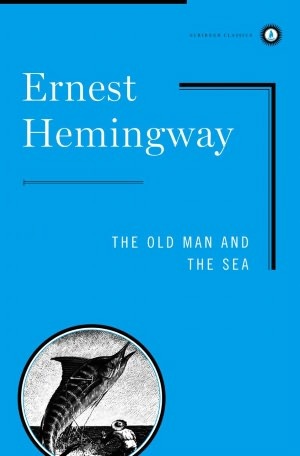
The Old Man and The Sea by Ernest Hemingway Review


The Old Man and the Sea

Fiction
132 pages

Here, for a change, is a fish tale that actually does honor to the author. The Old Man & the Sea revived Hemingway's career, which was foundering under the weight of such postwar stinkers as Across the River & into the Trees. It also led directly to his receipt of the 1954 Nobel Prize--an award he gladly accepted, despite his earlier observation that "no son of a bitch that ever won the Nobel Prize ever wrote anything worth reading afterwards". A half century later, it's still easy to see why. This tale of an aged Cuban fisherman going head-to-head with a magnificent marlin encapsulates Hemingway's favorite motifs of physical & moral challenge. The Old Man & the Sea was, in any case, the last great catch of Hemingway's career.

Completion: A+
Writing/Style: B
Characters: B+
Plot/Pacing: B-
World-building/Atmosphere: B
Sub-genres (Romance, Humor, Mystery, etc.): N/A


Final Grade: B+ Must Read


This novel was a happy surprise since most of my friends have told me how much they hate Hemingway, and I have had very little exposure to his work. However, even though I ended up enjoying it much more than I expected, I still find that it, along with some other books I have read recently, this book has made me acknowledge the flaws in my rating system and perhaps the flaw of any rating system.
 For a story that comprises mostly of one character alone for a long stretch of time doing only one thing, The Old Man and The Sea was a compelling read. It takes a great talent to make one character by himself interesting and dynamic and to have to a writing style that constantly drives his journey forward without losing steam. Of course, there is no need for me to overly praise Hemingway’s skill for there would be a line of people behind me ready to prove me wrong if I had said otherwise.
However, I wouldn’t say that the final grade isn’t completely accurate. I thought the story was good (don’t get me wrong!), but is it really worthy of a Must Read? I found this book a mild enjoyment that convinced me to follow through to the end, but ended with a reasonable but not particularly satisfying ending. I think if you are interested or curious in classics it wouldn’t be a bad one to check out, but I can’t honestly say that you must read it.
Yet, I found myself in the dilemma that I couldn’t bring the final grade down without making it appear that one of the six subcategories was lesser than what I thought it was. How am I to balance these two issues? I’m not quite sure yet. Perhaps, I will redo my rating system. Perhaps, not. In the near future, I might write a Topics post on the accuracy of rating systems. But for now, just know that The Old Man and The Sea didn’t blow me out of the water but did succeed in pushing me to its ending and to trying out more Hemingway books.

Monday, June 15, 2015

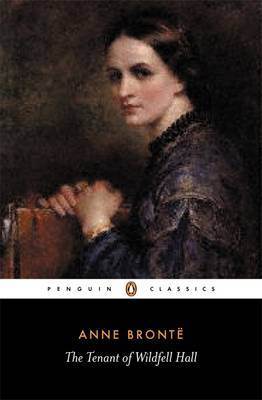
The Tenant of Wildfell Hall by Anne Bronte Review


The Tenant of Wildfell Hall

Fiction
535 pages

Gilbert Markham is deeply intrigued by Helen Graham, a beautiful and secretive young widow who has moved into nearby Wildfell Hall with her young son. He is quick to offer Helen his friendship, but when her reclusive behavior becomes the subject of local gossip and speculation, Gilbert begins to wonder whether his trust in her has been misplaced. It is only when she allows Gilbert to read her diary that the truth is revealed and the shocking details of her past.
Told with great immediacy, combined with wit and irony, The Tenant of Wildfell Hall is a powerfully involving read.

Completion: A
Writing/Style: D
Characters: F
Plot/Pacing: D-
World-building/Atmosphere: D-
Sub-genres (Romance, Humor, Mystery, etc.): F

Final Grade: D- At Your Own Risk

            This book nearly killed me. If you were wondering why it has taken me so long to update with another review, it is because it took me over a month to finish this one. It took an almost insurmountable effort to pick it back up after setting it down. The pacing was poor, the characters were horrible, the romance disgusting and unbelievable, and the narrator absolutely appalling. I’m going to go into some spoilery details, but since I don’t think you should read this book I really don’t care and neither should you. There are three main guys in this story, and they are horrible people (and not in the good, interesting way). Let’s get a list going of these lovelies, shall we?

            Gilbert Markham: main narrator
                        -suffers from Nice Guy Syndrome (aka won’t take no for an answer, always views himself as a victim, hurts everyone around him and then blames others, etc.)
                        -stalks Helen Graham
                        -befriends Helen’s son under false pretenses
                        -beats the crap out of his “friend” who he thinks is getting too close to Helen and then gets upset when said friend doesn’t want his help after the beating
                        -self-justification and major narcissism
                        -befriends Helen’s brother (the friend he beat up before) in order to stay close to Helen/get news about Helen
                        -drama queen

            Arthur Huntingdon: Helen’s husband
                        -a drunk
                        -a liar
                        -an adulterer
                        -makes his friend relapse into gambling and alcoholism because his friend was “boring” sober apparently
                        -doesn’t care for his son and views him as a competitor for his wife’s attention
                        -tries to turn his son against Helen

            Mr. Hargrave: friend to Arthur
                        -suffers from Nice Guy Syndrome as well


            And if these people weren’t frustrating enough, there’s Helen. While she’s not a “bad” person, her holier-than-thou attitude gets old real quick and creates a really monotonous and infuriating back and forth between her and the other characters. It’s as if Anne Bronte was trying to write a romance without any of the fun or romance. Now of course, Helen miraculously falls for Markham in the end which is only more disgusting by the fact that he hasn’t changed in the slightest, and they have zero believable chemistry between them. Even though Markham says he is nothing like Hargrave, I really couldn’t tell which of them was worse because they were so similar (except for some reason Helen likes Markham). Helen is essentially a mix between a punching bag and a chew toy for the other characters which is nauseating to read especially for how long this book goes on. The pacing was slow and sporadic, making this tragedy of a book go on much longer than it should have. There is nothing appealing about this book, and everything about it made me want to put it down and never pick it back up. I wouldn’t wish this book on my worst enemy. 

Thursday, January 8, 2015

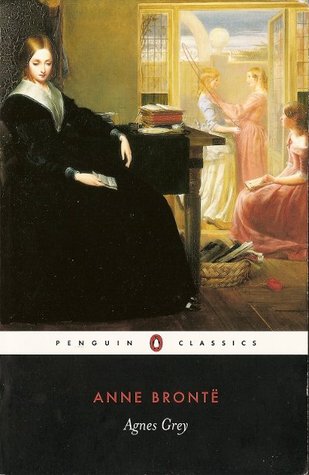
Agnes Grey by Anne Bronte Review


Agnes Grey
Fiction
153 pages

At age 19 Anne Brontë left home and worked as a governess for a few years before becoming a writer. Agnes Grey was an 1847 novel based on her experience as a governess. Bronte depicts the precarious position of a governess and how that can affect a young woman. Agnes was the daughter of a minister whose family was in financial difficulty. She has only a few choices for employment. Agnes experiences the difficulty of reining in spoiled children and how wealth can corrupt morals. She later opens a school and finds happiness.


Grade: B-  Must Read/Library Rental

Being a governess is the worst babysitting job ever. Agnes Grey shows the life of a governess: lonely, frustrating, unfair. However, unlike Jane Eyre and The Turn of the Screw, Agnes Grey is a quiet, mild book. The events are small, and even the book is small. In many ways, Agnes Grey has more of a nonfiction structure than fiction because it feels more like a series of events than the traditionally crafted plot. The romance is light and unassuming; the historical content interesting and sympathetic. There were points when I wanted to pull my hair out because I really truly felt the frustration of being in some of the helpless situations Agnes was in. Despite her troubles, like the synopsis suggests, it does end happily. I believe that even though this novel is normally overshadowed it can find an audience with those who enjoy this time period, history in general, and/or Bronte fans. Unlike Jane Eyre and The Turn of the Screw, it lacks the popular appeal of a large mystery or grand love story (making it more of a niche read), but it’s not a half bad novel if you give it the chance.

Completion: A
Like most classics I have found, once you get used to the language it is not too hard to follow the story and complete it. This is a rather small book, after all.
Writing/Style: B-
The style feels pretty stand of the time period, and for some that might require a bit of a learning curve. There were times when I thought the writing itself was interesting, but as a whole, it was more functional than elegant.
Characters: B-
Agnes and her family are sympathetic characters; however, they are so quiet and mild as to not give off much of an impression at all. I found Mr. Weston interesting and his relationship with Agnes the most engaging part of the novel because, while I was engrossed by her interactions with the families she worked for, these interactions tended to be negative, unpleasant, or at the very least frustrating.
Plot/Pacing: C+
For a fictional novel the pacing and plotting felt off. It came across as more like a bumpy road with slight troubles and inconveniences rather than a rising action leading to a mountain of change and turmoil. I did wonder quite a lot where exactly this novel was going. As I mentioned in the overall review, this novel feels more like nonfiction, and I believe if you know that going in it might be more enjoyable.
World-Building/Atmosphere: B+
Agnes’ isolation and frustration really shone through in several scenes. The world-building was there, but not especially impressive. However, points go for making me really feel what it was like to be a governess.
Sub-genres (Romance, Humor, Mystery, etc.): C-
The romance did not appear until the end which felt really late for me. As I read this book, I often wondered if there would be any sub-genres at all. The romance takes up a very small section of the novel toward the end, but it is dabbled in very lightly which can be refreshing from the hit-over-the-head Insta-Love that can be found in many a YA novel. There was little humor or mystery, focusing a lot on the straight telling of the circumstances Agnes has to deal with.


Question Time!
1. Have you read Agnes Grey? If so, did you like it?

2. What classics have you read and/or which are on your to-read list?